NGO letter
Food industry must be held accountable for driving rising obesity and ill health
World leaders meet today at the UN General Assembly to discuss their response to non-communicable diseases and mental health challenges. IBFAN, FIAN International and the World Public Health Nutrition Association call for close attention to the central role of ultra-processed products in driving an epidemic of food-related ill health and for strong safeguards to protect human and planetary health.
The Fourth High Level Meeting of the General Assembly on the Prevention and Control of Noncommunicable Diseases (NCDs) and the Promotion of Mental Health and Well-Being presents a critical opportunity to draw attention to the harm caused by ultra-processed food corporations shaping our food system.
Aggressive marketing pushes out healthier food options
Around the world, poor quality, addictive ultra-processed products have been aggressively marketed – to the detriment of more bio-diverse traditional foods – resulting in growing obesity levels especially among children and young people. This year, for the first time, the global prevalence of obesity overtook that of underweight children.
Global production and trade of these products exacerbate the root causes of the climate crisis: transport, plastic packaging, intensive agriculture, mono-cropping, deforestation and land-and-sea-grabbing. Women and children are especially impacted by climate change, environmental pollution and depleted water levels. Infant feeding products and plastic packaging are inherently risky and often contain endocrine disrupting chemicals that impact on infants’ immune, reproductive and endocrine systems.
Unhealthy diets
From the heavy use of agrotoxics and other chemicals to the aggressive marketing of ultra-processed “food” products (UPFs) and drinks, the industrial food system plays a central role in driving NCDs, such as heart diseases and strokes, obesity, cancer, and diabetes. An estimated quarter of the 43 million deaths attributed to NCDs each year have been linked to unhealthy diets – or in other words, diets high in UPFs promoted by the food industry.
Despite the growing urgency of this public health crisis, a draft political declaration has been negotiated behind closed doors ahead of today’s meeting. This text entirely fails to include a food systems perspective or properly consider the causes of ill-health – including the role played by the food and beverage industry in pushing products that are proven to cause substantial health harm. Instead of introducing safeguards to shield health policies from corporate influence, the declaration encourages industry engagement and thereby may instead obstruct efforts to regulate these harmful products and prevent NCDs.
IBFAN, FIAN International, World Public Health Nutrition Association and other civil society networks call on governments to incorporate a food systems perspective with strong safeguards to protect human and planetary health.
We insist that the final political declaration agreed today should provide for robust follow-up and accountability procedures that allow for the meaningful participation of public-interest civil society and rights holders. Furthermore, there must be clear and enforceable measures to prevent conflicts of interest and protect against undue influence and interference by the food and beverage industry in NCD-related policymaking at national and UN levels.
Letter from ten NGOs stronger safeguards: UNGA NGO letter
For more information contact:
Laura Michéle, FIAN International: Michele@fian.org.
Angela Carriedo, WPHNA: angela_carriedo@yahoo.com
Patti Rundall, IBFAN: prundall@babymilkaction.org
__________________________________________
Fourth High-level Meeting of the UN General Assembly on the prevention and control of NCDs and the promotion of mental health and wellbeing
New York City. 25 September 2025
The United Nations General Assembly will take place in New York City on 9-23 September. On the 25th September, there will be a one-day High Level meeting of States and Governments who will adopt a new Political Declaration for the Prevention and Control of Non-Communicable Diseases (NCDs) and the Promotion of Mental Health and Wellbeing towards 2030 and beyond.
With the over-whelming evidence of the harm agri-food, alcohol and tobacco industries are causing to public and planetary health, this meeting should surely produce a strong Declaration. The Zero Draft Political Declaration issue in May was already disappointing, as were Draft Rev 3, dated 4th August and the final Rev 4 dated 3rd September – which were drafted with no transparent consultations, Rev 4, that the co-facilitators claim is a “.. finalized version is the outcome of inclusive and held over the past five months.”
some excerpts:
Para 27: Reaffirm the importance of national ownership and the primary role and responsibility of governments at all levels to determine their own path in responding to the challenge of noncommunicable diseases and mental health conditions and underscore the importance of pursuing whole-of-government and whole-of-society approaches, and acknowledge that all stakeholders, including civil society, private sector, and people living with noncommunicable diseases and mental health conditions, play a role and can contribute to creating an environment conducive to preventing and controlling noncommunicable diseases and promoting mental health and well-being, and mobilizing all available resources, as appropriate, for the implementation of national responses;
Para 44 (e) promote healthy diets and reduce unhealthy diets, overweight and obesity through measures such as: (i) promoting increased availability and affordability of nutritious food and information on healthy eating including through promoting efficient, inclusive, resilient and sustainable agrifood systems; (ii) improving policies and taking measures to reduce industrially-produced trans-fatty acids to the lowest level possible and reduce excessive levels of saturated fats, free sugars and sodium; (iii) providing nutritional information to consumers, such as through front-of-pack labeling; (iv) putting in place public food procurement and service policies for healthy diets; (v) protecting children from the harmful impact of food marketing, including digital marketing; (vi) protecting, promoting and supporting optimal breastfeeding practices, including by regulating the marketing of breastmilk substitutes; and (vii) promoting adequate physical activity, including sports and recreation, and reducing sedentary behavior, including through increasing access to public spaces;
(f) reduce the harmful use of alcohol through accelerating the implementation of the Global Strategy to Reduce the Harmful Use of Alcohol (2010) and the Global Alcohol Action Plan 2022–2030, including by considering marketing and availability measures;
Para 64. Mobilize and allocate adequate, predictable and sustained resources for national responses to prevent and control noncommunicable diseases and to promote mental health and well-being, through domestic, bilateral and multilateral channels, including international cooperation and official development assistance, and continue exploring voluntary innovative financing mechanisms and partnerships, including with the private sector, to advance action at all levels;
Strengthen governance
- Promote, develop and implement noncommunicable diseases and mental health multisectoral national plans, and subnational plans, as appropriate to national circumstances and based on a whole-of-government, health-in-all policies and whole-of- society approach that: (i) are focused on a set of evidence-based, cost-effective and affordable interventions that are based on the local context; (ii) identify the roles and responsibilities of government ministries and agencies; (iii) are costed and budgeted and linked to broader health, development and emergency plans; (iv) respect human rights and engage in a culturally competent way with communities and people living with noncommunicable diseases and mental health conditions; (v) are ambitious, operational and realistic, and have measurable targets; and (vi) encourage international support, including from development partners, to complement these efforts;Address the impact of misinformation and disinformation around the prevention and treatment of noncommunicable diseases and mental health conditions and their risk factors, including by increasing health literacy and regulating the digital environment in a manner consistent with national and international law to protect especially children and young people;
Para 72.Address the impact of misinformation and disinformation around the prevention and treatment of noncommunicable diseases and mental health conditions and their risk factors, including by increasing health literacy and regulating the digital environment in a manner consistent with national and international law to protect especially children and young people;
Para 75: Share information on experiences, including successes and challenges related to the implementation of national policies and programmes to prevent and control noncommunicable diseases and promote mental health and well-being, and incorporate reporting on noncommunicable diseases and mental health into Sustainable Development Goals-related review processes such as the voluntary national reviews, including timely reporting on global targets, and establish or strengthen transparent national accountability mechanisms for the prevention and control of noncommunicable diseases, taking into account government efforts in developing, implementing and monitoring national multisectoral responses for addressing noncommunicable diseases and existing global accountability mechanisms, as appropriate;
- Recognize the key role of the World Health Organization as the directing and coordinating authority on international health in accordance with its Constitution to continue to support Member States through its normative and standard-setting work, provision of technical cooperation, assistance and policy advice, and the promotion of multisectoral and multistakeholder partnerships and dialogues;
Background to the NCD story (page down for more): IBFAN has been helping to tackle the commercial influence in NCD prevention strategies since 2002 when the first WHA Resolution on Diet, Physical Activity and Health was adopted, soon followed in 2004 with the Global Strategy on Diet, Physical Activity and Health (WHA57.17). The Global Strategy acknowledged that “…a profound shift in the balance of the major causes of death and disease has already occurred in developed countries and is under way in many developing countries. Globally, the burden of noncommunicable diseases has rapidly increased. In 2001 noncommunicable diseases accounted for almost 60% of the 56 million deaths annually and 47% of the global burden of disease..” and that “..Unhealthy diets and physical inactivity are thus among the leading causes of the major noncommunicable diseases” In attempting to address the problem, the Global Strategy tiptoed around the solutions suggesting all sorts of collaborations, including with the private sector. It did mention Conflicts of Interest – twice, but not this was hardly enough to stop the key industry strategy: multi-stakeholder partnerships, alongside industry funding of front groups and influencers. The assumption was that self-regulation would work.
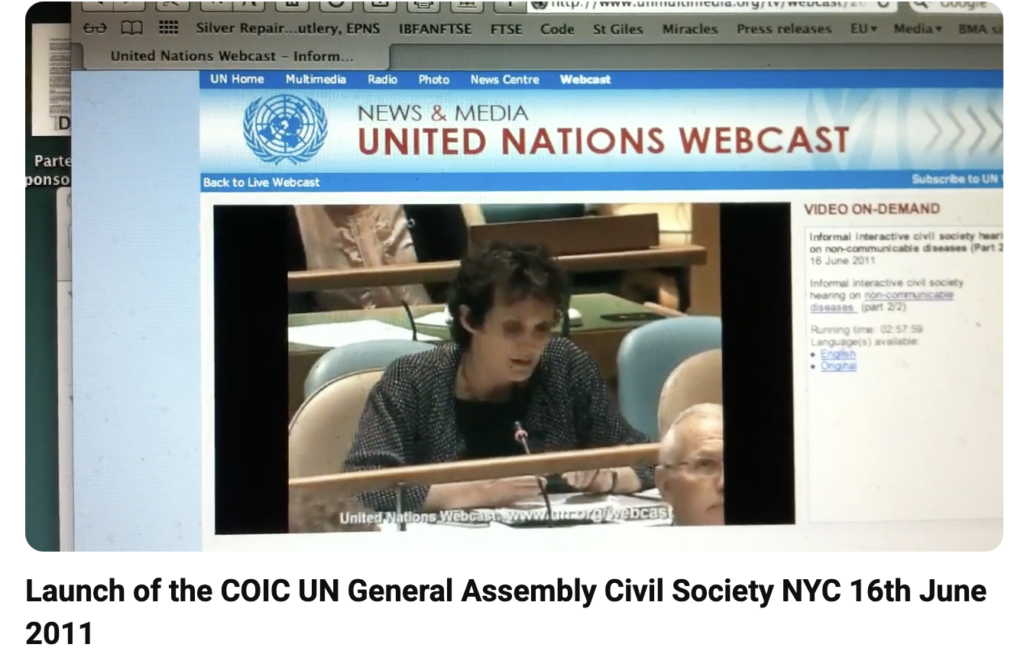
In 2011 it was decided to try for a Political Declaration at the UN Assembly. Because of the clear risks, especially with new Corproate funded NGOs challenging the need for Conflict of Interest safeguards, together with partner World Cancer Research Fund, Centre for Science in the Public Interest and other NGOs working on obesity, alcohol and tobacco, we launched a Conflict of Interest Coalition, specifically calling for a Code of Conduct and Ethical Framework for policy setting and safeguards from commercial influence. Within a few months 162 NGOs, including 4 UK Royal Colleges endorsed the COIC statement Recording of IBFAN launching the Statement.
Draft UN declaration rolls back proposed restrictions on sugary drinks, tobacco by Ashley Okwuosa https://www.theexamination.org/articles/new-draft-un-declaration-rolls-back-proposed-restrictions-on-sugary-drinks-alcohol-and-tobacco
Corporate Power and Human Rights in Food Systems. (A_80_213-EN) The Final Report of the United Nations Special Rapporteur on the Right to Food, Mr. Michael Fakhri, that will be presented to the General Assembly on 17 October 2025.
Some excerpts from the latest Draft 3 of the Political Declaration on NCDs (dated 4th August 2025):
Para 77 Recognize the key role of the World Health Organization as the directing and coordinating authority on international health in accordance with its Constitution to continue to support Member States through its normative and standard-setting work, provision of technical cooperation, assistance and policy advice, and the promotion of multisectoral and multistakeholder partnerships and dialogues;
Para 81 “Call upon the private sector to strengthen its commitment and contribution to the prevention and control of noncommunicable diseases and the promotion of mental health and well-being through the implementation of the present political declaration and the outcomes of the previous high-level meetings of the General Assembly on the prevention and control of noncommunicable diseases held in 2011, 2014, and 2018, taking into account the need to prevent conflicts of interest”
The Zero Draft Political Declaration had a minimal reference to breastfeeding in Para 27 – and then “promotion” rather than regulations to protect:
“Enact within national and, where relevant, regional contexts legislation and regulation and take action to:……d:“Reduce unhealthy diet, overweight and obesity by: (i) eliminating trans-fatty acids, and reduce levels of saturated fats, free sugars and sodium in processed food and beverages; (ii) providing front-of-pack labelling for food and beverages; (iii) putting in place public food procurement and service policies for healthy diets; (iv) protecting children and young people from the harmful impact of food marketing, including digital marketing; and (v) promoting optimal breastfeeding practices”
- 2018 Political declaration of the 3rd High-Level Meeting
- 2014 Outcome document of the 2nd High-Level Meeting
- 2011 Political Declaration of the High-level Meeting of the General Assembly on the Prevention and Control of Non-communicable Diseases A_66_L-1-EN
Para 43 (i) Promote, protect and support breastfeeding, including exclusive breastfeeding for about six months from birth, as appropriate, as breastfeeding reduces susceptibility to infections and the risk of undernutrition, promotes infant and young children’s growth and development and helps to reduce the risk of developing conditions such as obesity and non-communicable diseases later in life, and, in this regard, strengthen the implementation of the international code of marketing of breast milk substitutes and subsequent relevant World Health Assembly resolutions;
Monitoring and Evaluation Para 61. Call upon WHO, with the full participation of Member States, informed by their national situations, through its existing structures, and in collaboration with United Nations agencies, funds and programmes, and other relevant regional and international organizations, as appropriate, building on continuing efforts to develop before the end of 2012, a comprehensive global monitoring framework, including a set of indicators, capable of application across regional and country settings, including through multisectoral approaches, to monitor trends and to assess progress made in the implementation of national strategies and plans on non-communicable diseases;
Time line:
2004: Adoption of the Global Strategy on Diet, Physical Activity and Health (WHA Res 57.17) “cooperate with civil society and with public and private stakeholders committed to reducing the risks of noncommunicable diseases in implementing the Strategy and promoting healthy diet and physical activity, while ensuring avoidance of potential conflicts of interest;
April 2011 WHO trialed a Global Forum in Moscow. PepsiCo, Coca Cola, Nestlé and the World Federation of Advertisers attended in their own capacity (or as the International Food and Beverage Alliance (IFBA)) rather than as bodies in official relations with WHO. IBFAN’s press release.
June 2011. Conflicts of Interest Coalition launched at the UN Civil Society session of the General Assembly on NCDs The Statement is soon endorsed by 162 organisations representing over 2000 NGOs.
16 September 2011. Political Declaration of the High-level Meeting of the General Assembly on the Prevention and Control of Non-communicable Diseases A_66_L-1-EN This contains some strong safeguards on breastfeeding:
Para 43 (i) Promote, protect and support breastfeeding, including exclusive breastfeeding for about six months from birth, as appropriate, as breastfeeding reduces susceptibility to infections and the risk of undernutrition, promotes infant and young children’s growth and development and helps to reduce the risk of developing conditions such as obesity and non-communicable diseases later in life, and, in this regard, strengthen the implementation of the international code of marketing of breast milk substitutes and subsequent relevant World Health Assembly resolutions;
But is weak on conflicts of interest:Para 37. Acknowledge the contribution and important role played by all relevant stakeholders, including individuals, families, and communities, intergovernmental organizations and religious institutions, civil society, academia, media, voluntary associations, and, where and as appropriate, the private sector and industry, in support of national efforts for non-communicable disease prevention and control …
2014 Outcome document of the High-Level Meeting of the General Assembly on the Comprehensive Review and Assessment of the Progress Achieved in the Prevention and Control of Non-communicable Diseases : draft resolution / submitted by the President of the General Assembly.
10-12 October 2014: INTERNATIONAL CONFERENCE ON NUTRITION 2 FAO Rome. Political Declaration and the Framework for Action for the Second International Conference on Nutrition (ICN2). CSO statement
28th May 2016: WHO Framework of Engagement with non- State actors WHA69.10 adopted
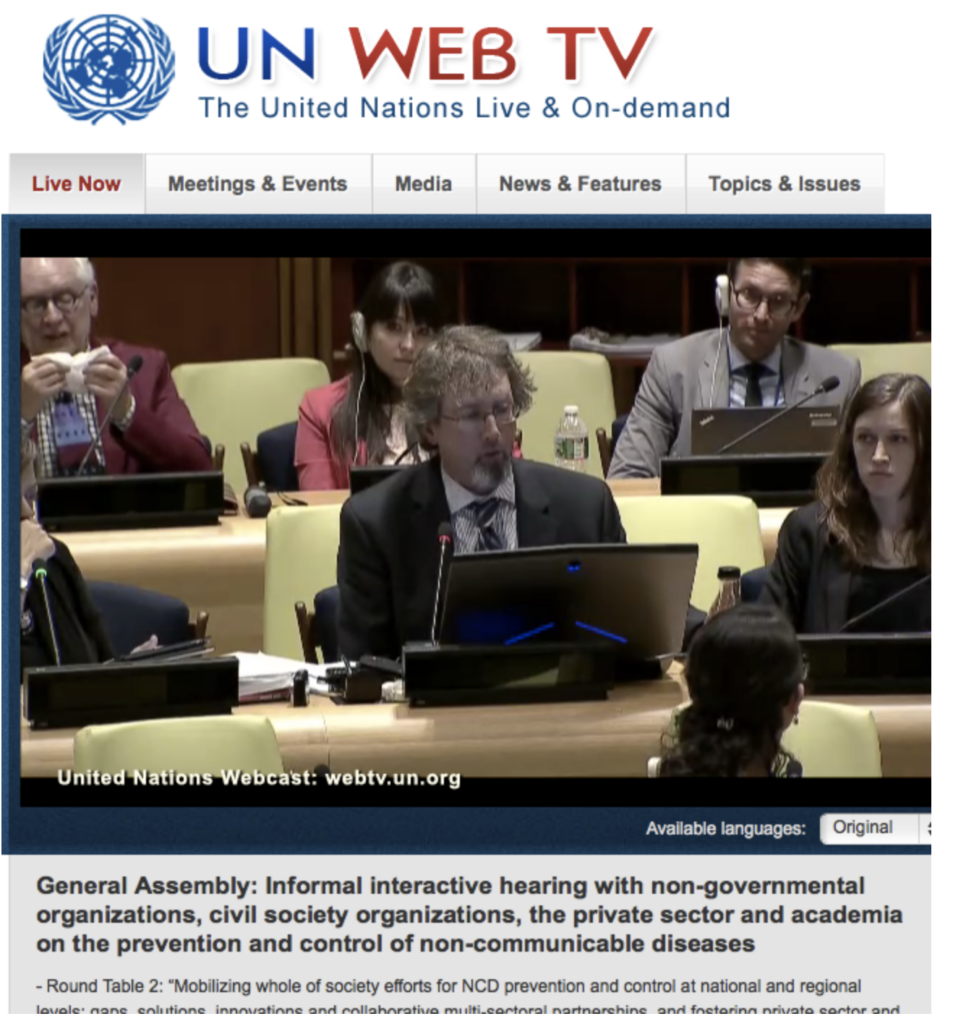
Bill Jeffrey, Centre for Science in the Public Interest, helping to launch the COI Coalition.
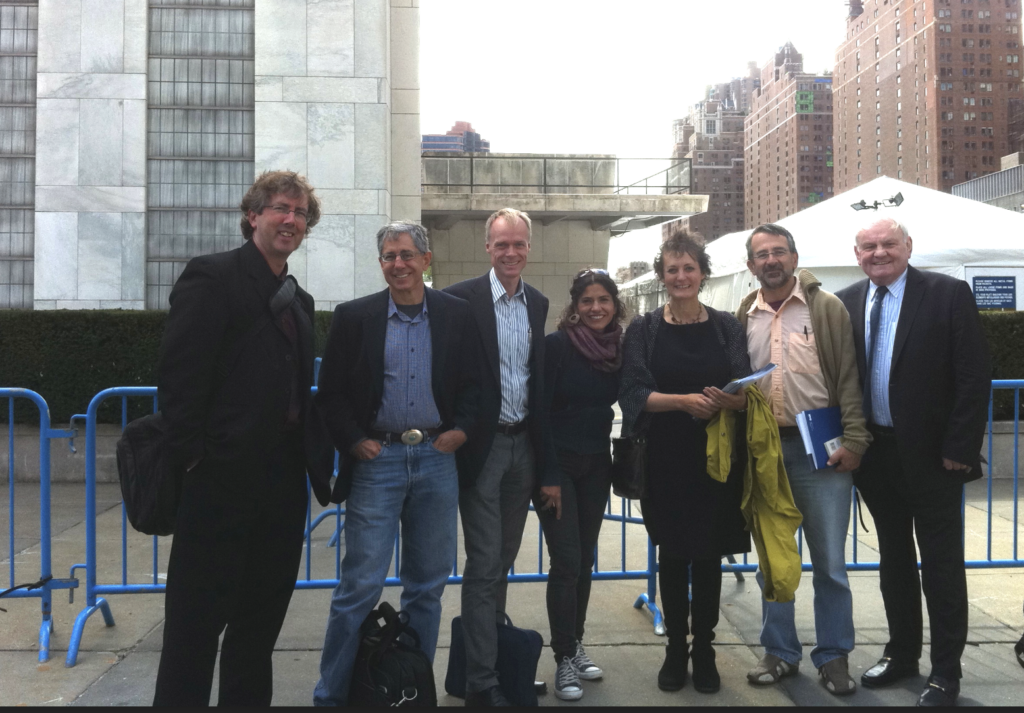
UN General Assembly. Sept 2011. NGOs supporting the Conflict of Interest Statement.
Some new publications on Conflicts of interest in the Future Healthcare Journal: